As the U.S. fashion landscape evolves rapidly in 2025, brands are being tested on agility, innovation, and authenticity. From integrating advanced technologies to rethinking retail, the industry is rewriting the playbook. The good news? Those who adapt strategically are not only surviving—but thriving.
Key Industry-Wide Trends Shaping Fashion in 2025
AI Integration Becomes the Norm
Roughly 73% of fashion executives now consider AI a top priority. From streamlining operations to hyper-personalizing marketing and customer journeys, AI is helping brands scale while offering tailored experiences.
Diversifying Sourcing to Mitigate Risk
With increased scrutiny on ethical practices and legislation like the Uyghur Forced Labor Prevention Act, brands are moving beyond China and diversifying their supply chains across multiple countries.
Omnichannel is Essential
Pure e-commerce is no longer the growth engine it once was. Today’s successful brands are blending physical retail and online platforms to create seamless, hybrid customer experiences.
Community-Driven Retail Experiences
Brands are thinking beyond the storefront by creating pop-ups in nontraditional “third places” like cafés, gyms, and art studios—bringing fashion to where life happens and forging stronger community ties.
Winning Strategies From America’s Leading Fashion Brands
Here’s how today’s most successful U.S. fashion brands are standing out:
1. Local, Small-Batch Manufacturing
Brands like Kallmeyer and MisMister are cutting lead times, improving quality, and aligning with sustainability by producing locally and in smaller quantities.
2. Distinctive, Authentic Aesthetic
Whether it’s MisMister's Victorian-meets-streetwear style or Elena Velez's industrial couture, storytelling through design is a brand’s visual signature—and customers crave it.
3. Direct Customer Relationships
Founders who remain hands-on (like those at Kallmeyer) foster deeper loyalty by building real, personal connections with their customers.
4. Cultural Relevance Through Gen Z
Brands like Brandy Melville tap into youth culture with low-key advertising and viral social media engagement—winning Gen Z's attention without shouting.
5. Craftsmanship & Artisan Collaborations
From heritage textiles to local maker partnerships, brands like Elena Velez stand out through their dedication to craftsmanship and depth of detail.
6. Innovation in Product Function
Performance and function are now part of the fashion conversation. Brands like Hoka (by Deckers) are leading the way with technical innovation that’s both visible and wearable.
7. Smart Retail & Wholesale Mix
A hybrid model of direct-to-consumer and strategic wholesale relationships (e.g., Brandy Melville in PacSun and Nordstrom) helps scale while maintaining exclusivity.
8. Personalization Through AI & Data
From personalized product recommendations to custom-fit algorithms, AI is driving smarter, more intuitive shopping experiences.
9. "Third Place" Retail Activations
Pop-up shops in unexpected lifestyle spaces—from gyms to cafés—are creating buzz while reinforcing brand identity and community.
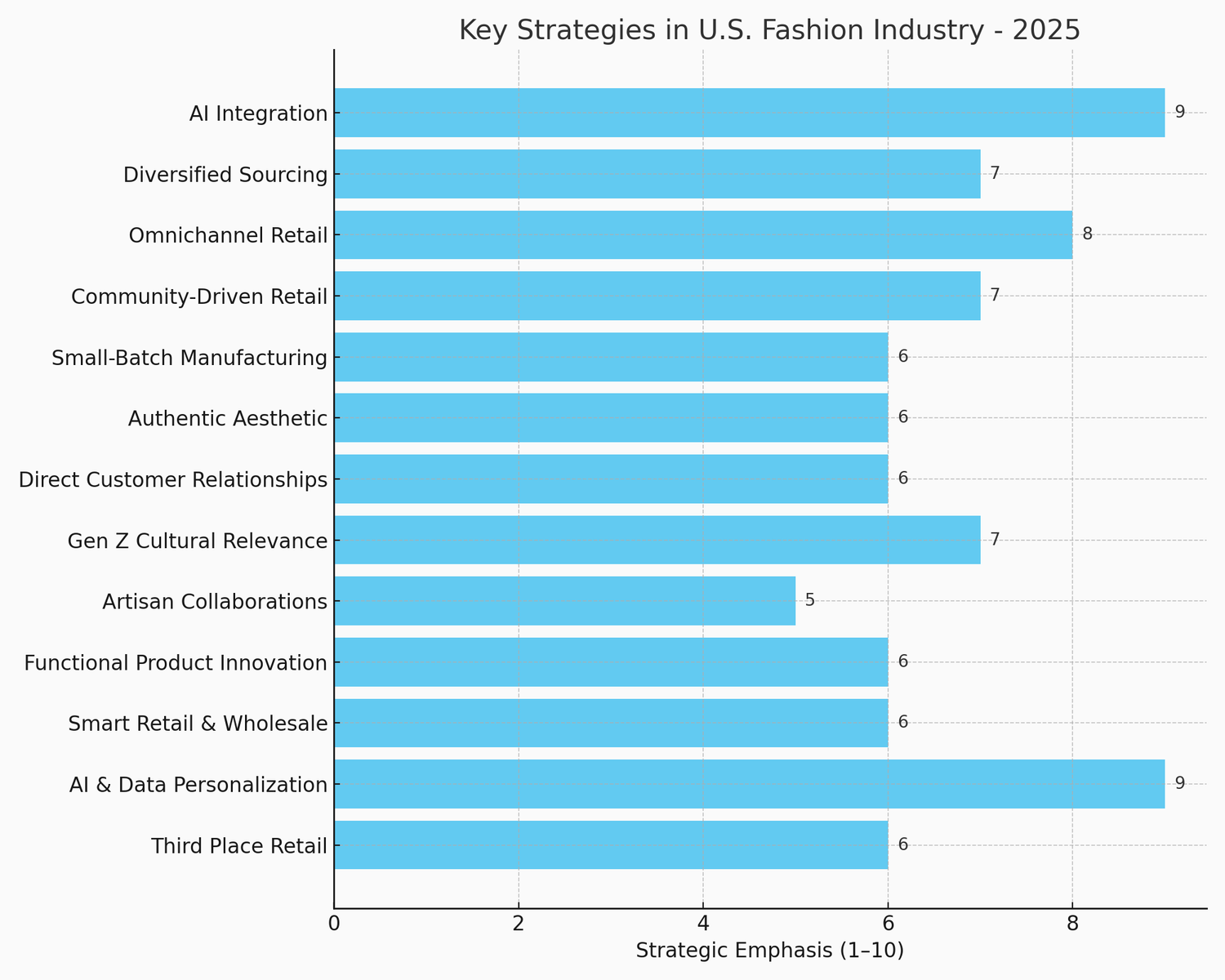
Here's a visual of key 2025 U.S. fashion strategies, rated by their relative strategic emphasis.
AI integration and personalization stand out as top priorities, while omnichannel and cultural relevance continue to be critical pillars in a fast-evolving market.